In brief
- Blisters are caused by friction, and wet skin gives way to friction more easily. Good socks keep the foot drier and do not form creases.
- Do not wear cotton socks on a hike. Merino wool, synthetic fibres or a blend of the two are better.
- Choose the thickness of your socks together with your footwear: try the footwear on with the socks you will be wearing.
- On a long hike, take dry spare socks with you and change into them as soon as your feet are wet.
Why socks are so important
A blister forms when the skin rubs against a sock or shoe for a prolonged period. Sweat and water soften the skin, so a blister forms more quickly in a wet sock. Socks that wick away moisture, fit well and have no thick seams are one of the simplest ways to avoid blisters. This is just as important as well-fitting, broken-in footwear.
Materials
| Material | Advantages | Disadvantages | When to choose |
|---|---|---|---|
| Merino wool | Warm even when wet, regulates temperature well, accumulates odour more slowly, soft | Dries more slowly than synthetics, wears out faster, more expensive | Multi-day hikes, cool weather, when it is not possible to wash the socks often |
| Synthetic (polyamide, polyester, elastane) | Dries quickly, durable, light, cheaper | Accumulates odour faster | Hot weather, quick day hikes, wet terrain where socks often get soaked |
| Blend (merino with synthetics) | The warmth of wool and the durability of synthetics | Properties depend on the proportions | Most hikes |
| Cotton | Soft, cheap | Absorbs moisture and takes a long time to dry, loses its shape when wet and forms creases | Not suitable for hiking; suitable only at camp or in the car after a hike |
Almost all hiking socks contain a small amount of elastane or a similar fibre. This holds the sock in place and prevents it from slipping or creasing.
Thickness and padding
Hiking socks usually have extra padding at the heel and the ball of the foot, where the pressure is greatest.
- Thin socks with light padding are suitable for summer, light footwear and footwear without a membrane.
- Medium-thickness socks are suitable all year round and for most hiking boots.
- Thick socks are suitable for winter, snowshoes and tall, warm boots.
A thicker sock is not automatically better. If it makes the footwear too tight, the foot is compressed, circulation worsens and the foot gets even colder. Try on your footwear with the same socks that you will be wearing.
Height
The sock must be higher than the edge of the footwear, otherwise the edge of the shoe rubs the skin. Short socks that reach the ankle are suitable for low shoes, while longer socks are suitable for boots. Long socks are also useful when walking through tall grass or undergrowth. The Centre for Disease Prevention and Control recommends tucking trouser legs into socks or footwear to make it harder for ticks to reach the skin.
Two-layer system
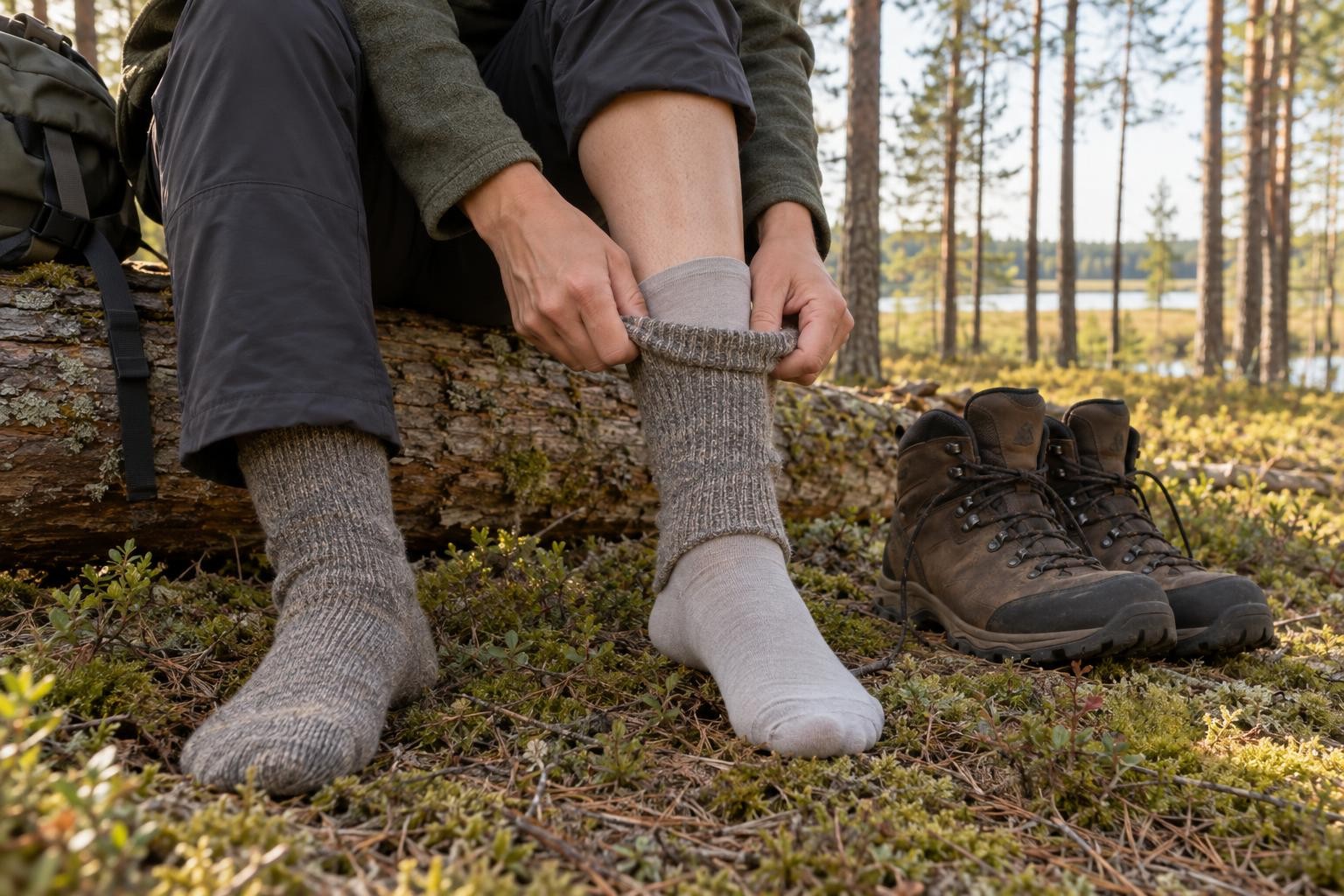
Some hikers who often get blisters use two pairs of socks: a thin, smooth inner sock with an ordinary hiking sock over it. In this case, the friction occurs between the two socks rather than between the skin and the sock. This system is not necessary for everyone, but it is worth trying if blisters keep recurring.

Size
Choose the size of your socks according to the manufacturer’s size chart and your footwear size. If the sock is too large, its heel part slides up onto the ankle and a crease forms under the foot. If the sock is too small, it is pulled down and squeezes the toes. In a good sock, the heel part sits exactly on the heel and forms no creases anywhere.
How to avoid blisters
-
Start with dry feet
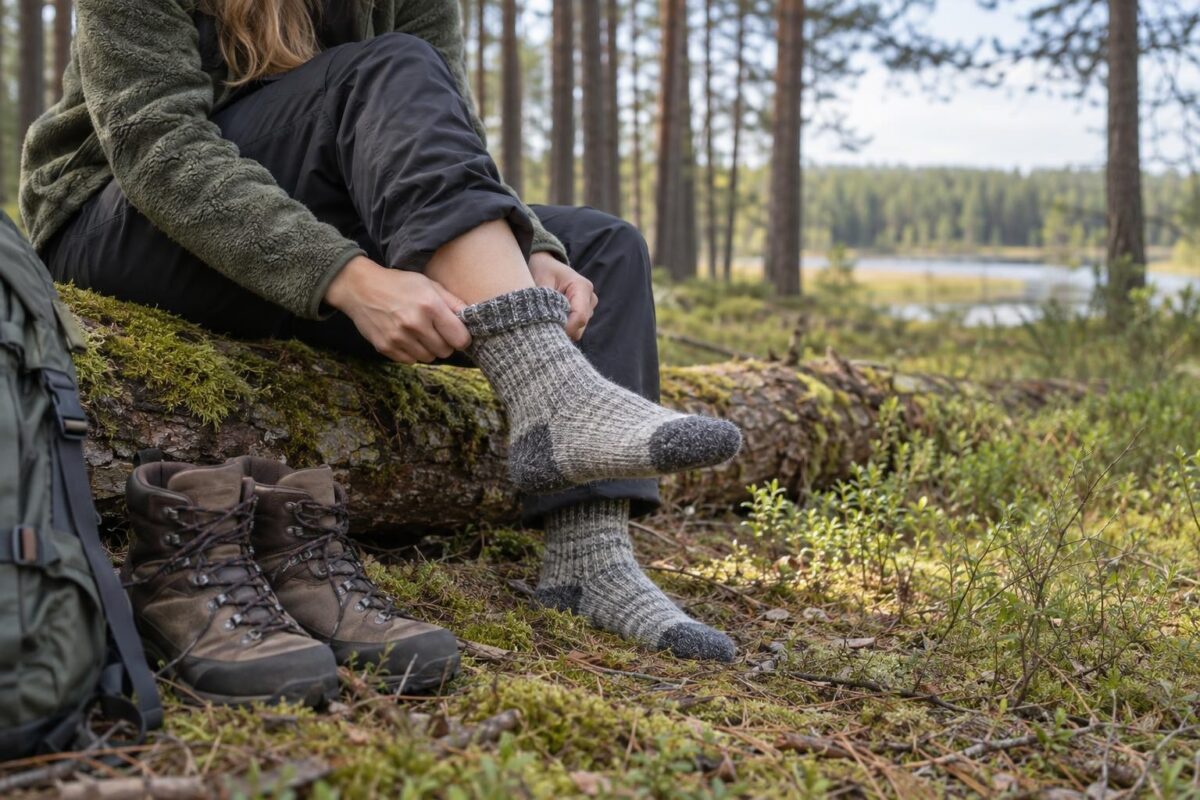
Put on clean, dry socks and check that they have no creases and that there is no sand or pine needles on your skin.
-
React to the first sensation
If you feel warmth or rubbing in any spot, stop immediately. Apply a plaster or blister plaster to that spot before a blister has formed.
-
Change your socks
If your socks are soaked or very sweaty, put on dry ones. Tie the wet ones to your rucksack so that they dry.
-
Take off your footwear when resting
During a longer break, take off your footwear and socks so that your feet can dry.
-
Do not pierce blisters
If a blister has already formed, do not pierce it. Apply a soft plaster and protect the blister. If the blister is very painful or shows signs of infection, see a doctor.
Care
Wash merino socks at a low temperature, with a detergent intended for wool or on a gentle cycle, and do not use fabric softener. Dry them laid out flat, not on a hot radiator, because wool may shrink in the heat. Follow the instructions on the sock label. Synthetic socks are less demanding, but the elastane in them also loses its elasticity faster in the heat.
What to take with you
- On a day hike, one pair of spare socks in a waterproof bag
- On a multi-day hike, at least two pairs: one for walking, the other kept dry
- A separate pair of warm socks for the night, which are not worn during the day
- Plasters or blister plasters
You will find routes in the section Hiking.