In brief
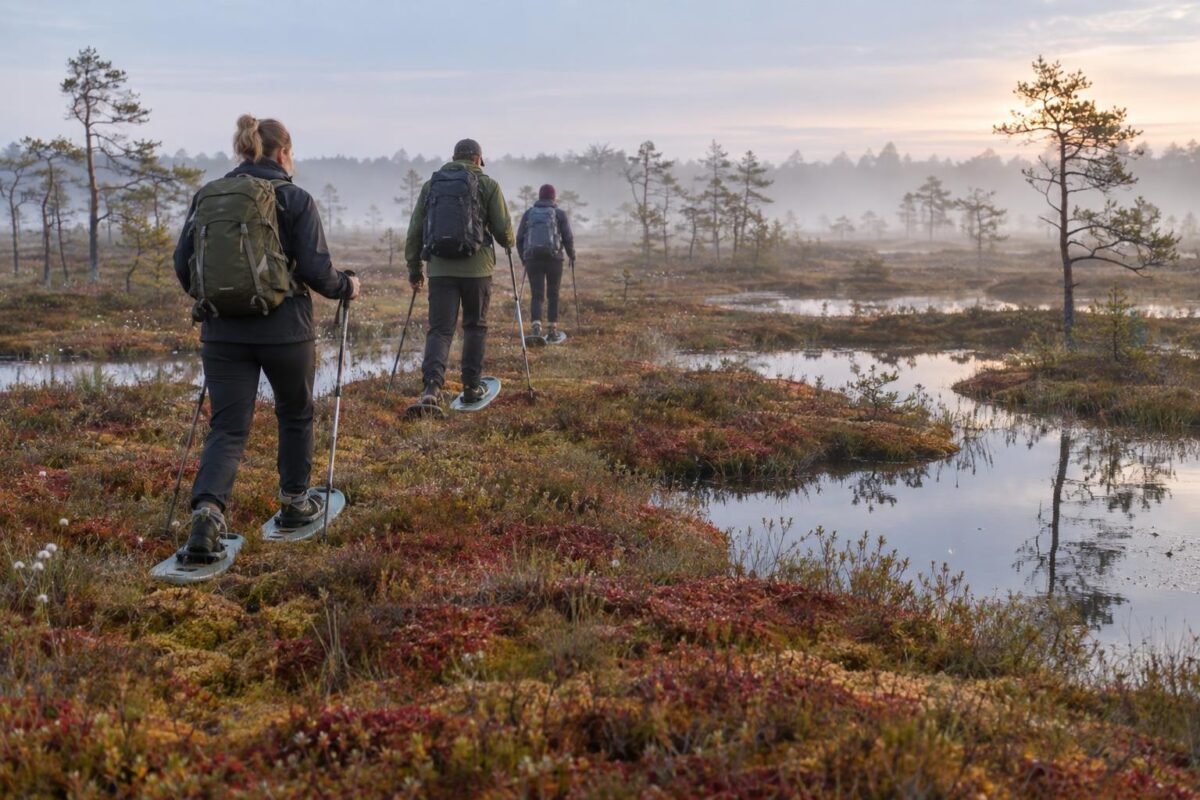
- Bog shoes are wide plastic bases that are strapped onto footwear. They spread body weight over a larger area, so the feet sink less into the moss.
- They can also be used off the boardwalks, but only where this is permitted. Staying in the strict regime zones of nature reserves is prohibited.
- For a beginner it is safer to go with a guide, who knows the bog and usually provides the shoes as well.
- Bear in mind that your feet will get wet: you need footwear that can withstand this, and dry spare socks.
What bog shoes are
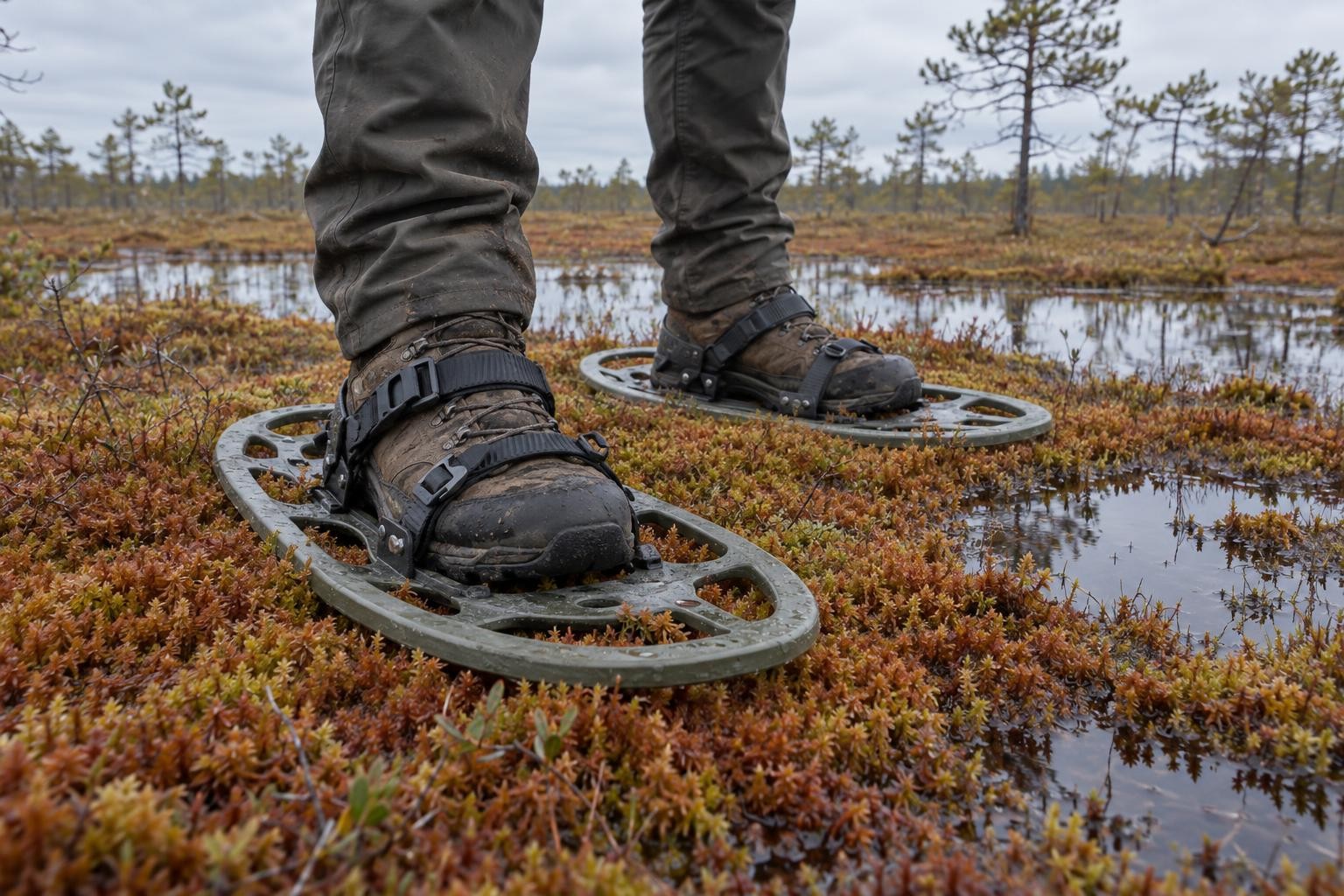
Bog shoes are wide, flat bases with straps or buckles. They are attached to ordinary hiking footwear. Nowadays they are made of durable, light plastic, whereas in the past they were woven from willow twigs or made of leather. In appearance and principle of operation they resemble snowshoes, and some models are used both in bogs and on snow.
In a raised bog the ground is soft and wet: the top layer is sphagnum moss, and beneath it there are peat and water. In ordinary footwear the foot sinks with every step, and each time it has to be pulled out. With bog shoes it is possible to walk over the same surface much more evenly and with less damage to it.

How they work
The principle of operation is simple physics. Pressure is weight divided by area. If the support area is several times larger than the sole of a boot, the pressure on the surface is lower by the same number of times. As a result, the foot sinks less, it is easier to keep your balance, and the moss cover is damaged less.
Bog shoes nevertheless do not turn a bog into solid ground. In the wettest places the foot will still sink, and footwear may fill with water. Open water, such as bog pools and deep hollows, is dangerous even with bog shoes.
How to walk with bog shoes
-
Attach and adjust
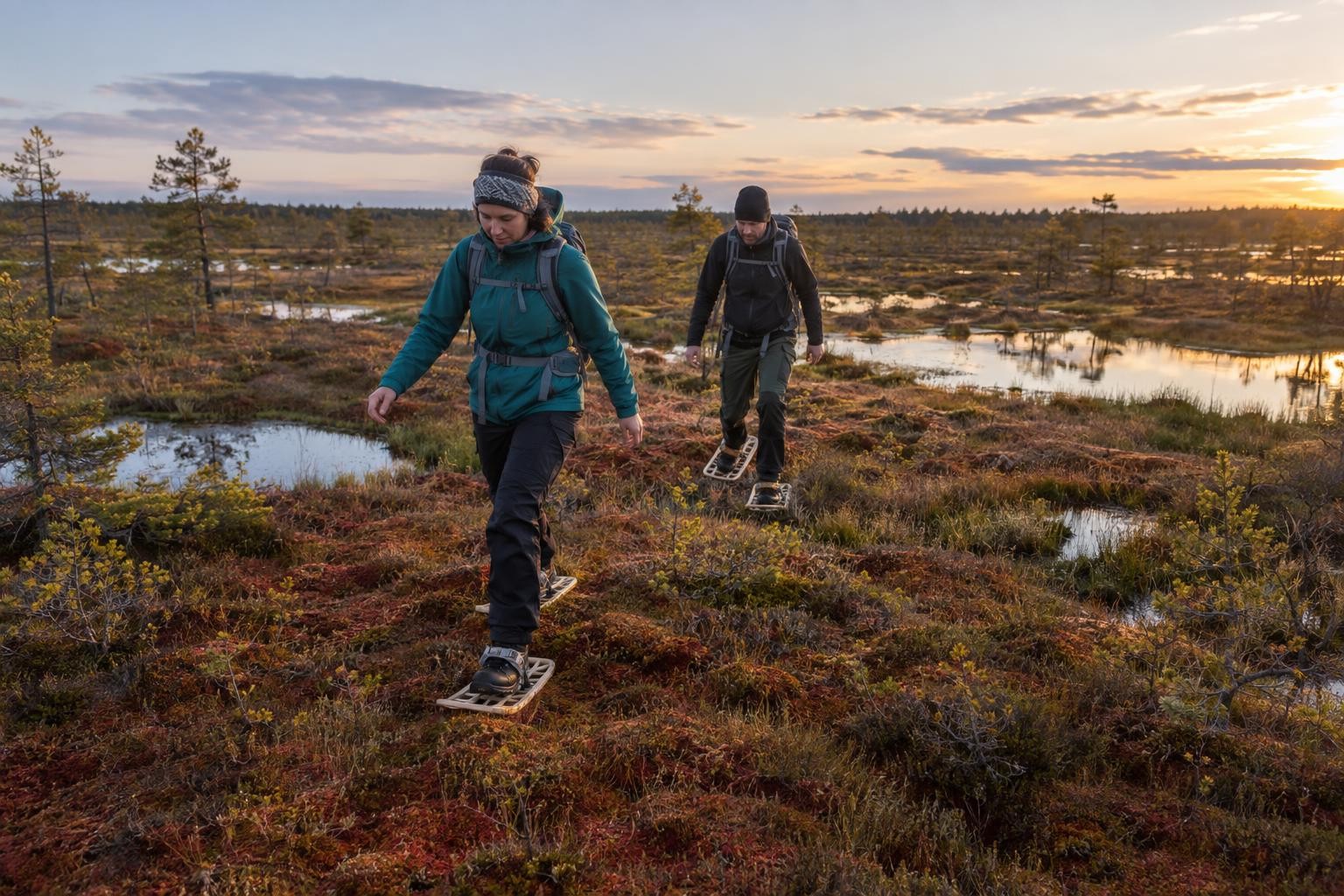
Place the boot in the middle of the shoe and tighten the straps so that the foot slides neither forwards nor sideways. Check and adjust the fastenings while still on solid ground, as doing so in the bog is much more difficult.
-
Walk with a slightly wider stance
Keep your feet slightly further apart than usual so that you do not step on one shoe with the other. Otherwise it is easy to trip during the first minutes.
-
Lift the foot up, do not drag it
If a shoe has sunk in, do not try to pull it forwards. Lift the foot straight up, let the water drain off and only then take a step.
-
Use poles
Hiking poles with wide baskets (the kind used on snow) help to keep your balance and to test the ground ahead.
-
Follow the leader
In a group, walk in the footsteps of the person ahead and do not fall behind. The guide knows where the ground is firm and where it is not.

Where walking is permitted
A large part of Latvia’s bogs are located in specially protected nature territories. These have restrictions that also apply to pedestrians.
- In the strict regime zone of a nature reserve, staying and moving about is prohibited. The exception is with written permission from the Nature Conservation Agency and along routes marked in the field.
- In the regulated regime zone of a nature reserve, it is permitted to move along roads and routes marked in the field.
- In nature reserves (dabas liegumi) and nature parks, there is no general prohibition for pedestrians. However, many territories also have individual protection rules, and these may be stricter. For example, in the strict regime zone of Teiču Nature Reserve, entry is permitted only with the permission of the administration for research and protection purposes.
- In protected territories, campfires may be lit only in specially designated places.
Before going to a particular bog, check whether it is located in a protected territory and what rules apply to it. The boundaries of territories and the rules can be found on the website of the Nature Conservation Agency daba.gov.lv. Also follow the signs in the field.
What to wear and what to take with you
In a bog the feet almost always get wet. The best choice is hiking footwear that withstands getting wet, or high boots. Choose trousers made of quick-drying fabric. They may be long, as the ground is covered with heather, bog-rosemary and twigs.
- Footwear that you do not mind getting wet; bog shoes can be attached to it
- Dry spare socks and footwear for the way back, left in the car
- Hiking poles with wide baskets
- Water and snacks: there is no shade in a bog, and it can be hot there in summer
- Headwear and sun cream
- A charged phone in a waterproof bag and a downloaded map or GPX file
- Mosquito and tick repellent
- A bag for litter: leave nothing behind in the bog
Bog shoes and snowshoes
| Bog shoes | Snowshoes | |
|---|---|---|
| Surface | Wet moss, soft peat, shallow water | Loose, deep snow |
| Purpose | To distribute weight so that the foot does not sink into the moss | To distribute weight so that the foot does not sink into the snow |
| Grip | Usually a smooth or slightly ribbed base | Often with metal spikes for grip on ice and on slopes |
| Footwear | Footwear that can get wet | Warm and waterproof |
Some models are suitable for both purposes. Before going into a bog with snowshoes, check whether their fastenings and frame can withstand wet peat and mud.
Where to find routes
Routes suitable for bog shoes are collected in the section Bog shoes. If you wish to walk through a bog without stepping off the boardwalks, see the hiking routes: many bog trails have boardwalks, for which shoes are not needed.