In brief
- A backpack is sufficient for a short trip. On a longer trip, it is better to carry belongings on the bicycle rather than on your back.
- Place the heaviest load low and close to the wheel axles, and distribute it equally on both sides.
- Bags or a trailer must not interfere with steering, braking or visibility, and must not cover lights and reflectors.
- Before a long trip, test the loaded bicycle on a short loop close to home.
Backpack or bags on the bicycle
On a ride of a couple of hours, a small backpack is convenient: it holds water, a jacket and snacks, and can be taken along when you leave the bicycle. However, with every kilogram and every hour it becomes less comfortable. The back sweats, the load falls on the shoulders and the buttocks, and the saddle presses harder. If the trip lasts all day or several days, it is better to carry belongings on the bicycle itself.
Types of bags
| Type | Where attached | Suitable for | Points to note |
|---|---|---|---|
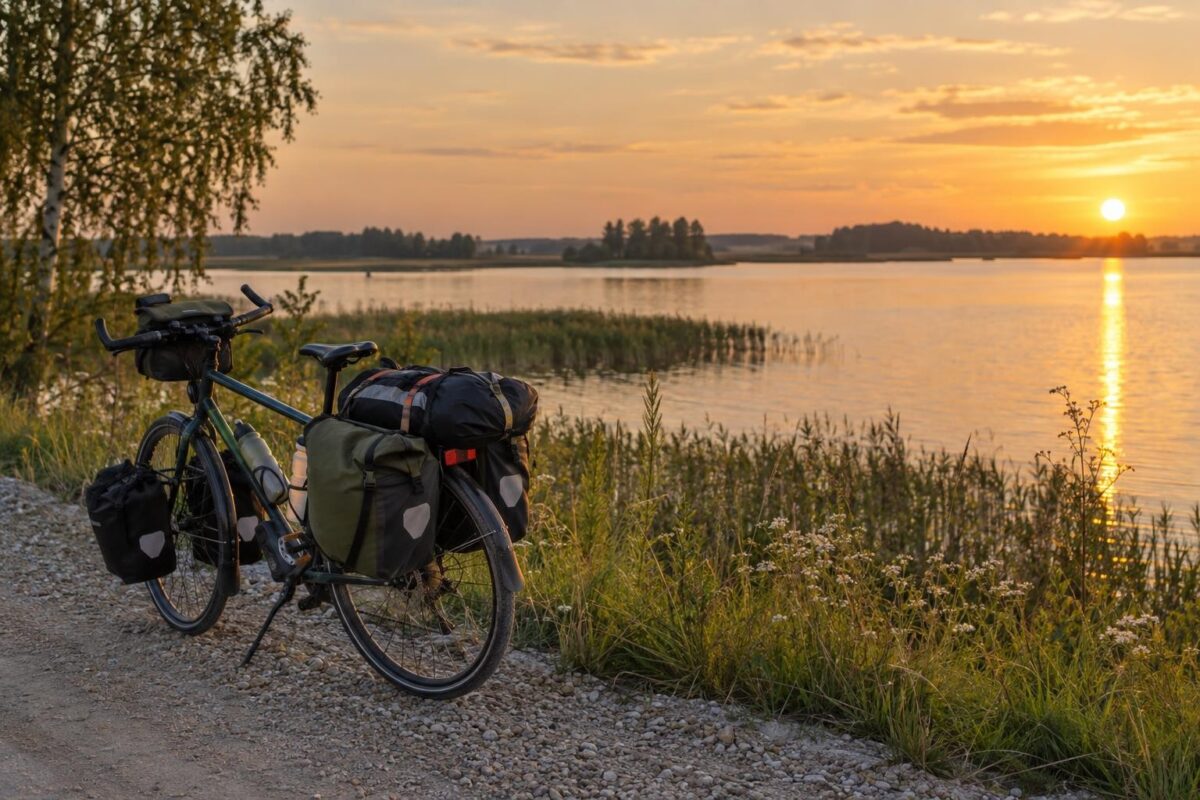
| Pannier bags | On the rear (less often the front) rack | Multi-day trips and large loads; easy to pack and unpack | A rack and mounting points on the frame are required; side bags create wind resistance |
| Rack bag | On top of the rack | Day trips, additional space | The load sits higher, so do not place the heavier items there |
| Frame bag | Inside the frame triangle | Heavier, dense items: tools, food | May take up space needed for bottle cages |
| Saddle bag | Under the saddle and on the seatpost | Light, bulky items: clothes, a sleeping bag | May sway; usually not suitable for bicycles with a dropper seatpost |
| Handlebar bag or roll | On the handlebars | Light items and things needed close at hand | A heavy load in front of the handlebars makes steering heavier; it must not cover the front light |
| Trailer | On the rear axle or frame | A very large load, carrying children or a dog | Longer braking distance; width and length in narrow places |
Pannier bags and so-called bikepacking bags (frame, saddle and handlebar) can also be combined. A pannier system holds more and is easier to pack. Bikepacking bags are lighter and narrower, and are more convenient on gravel roads and forest trails.
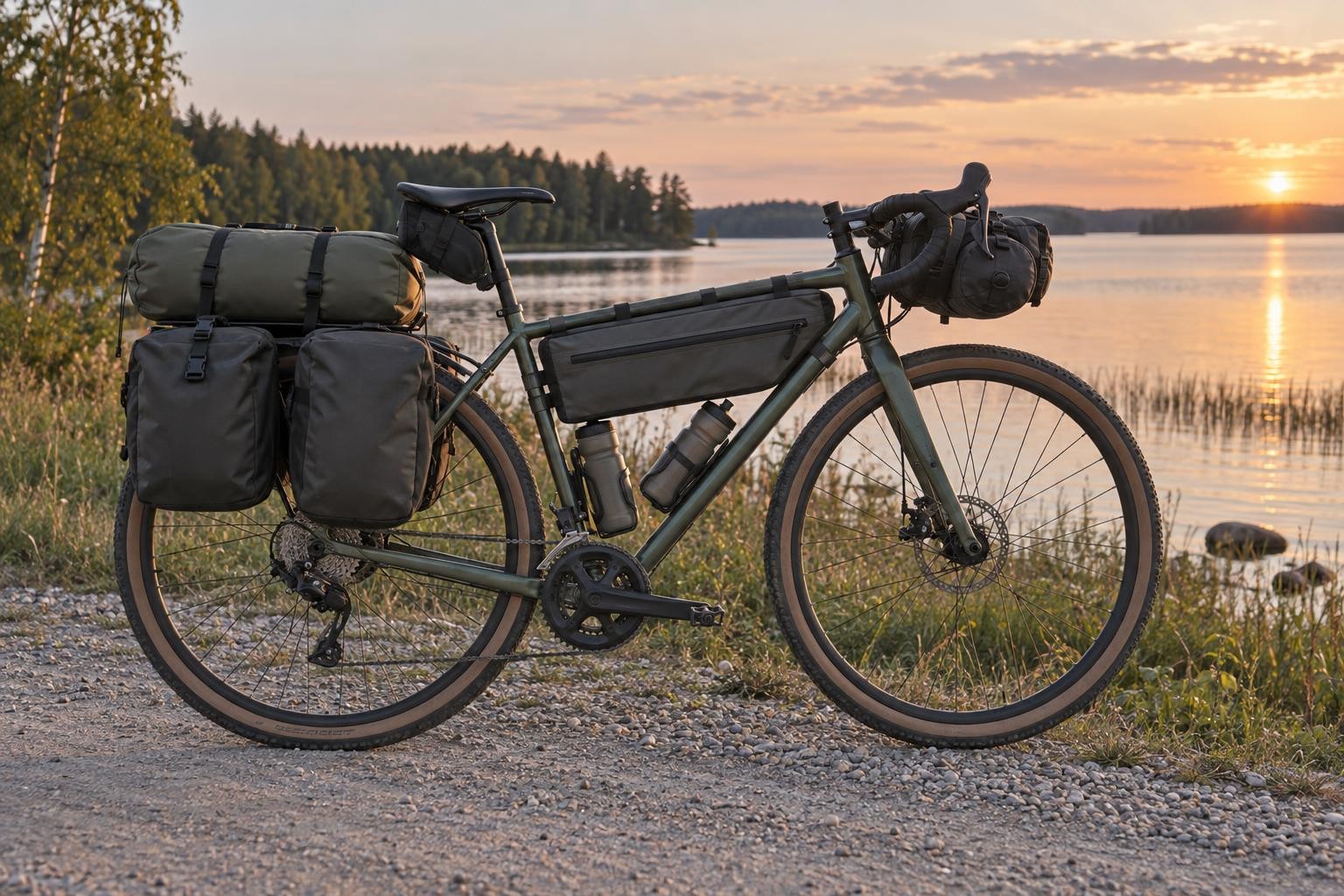

Rack and mounting points
Before buying bags, examine the bicycle. Installing a rack on the frame and fork requires threaded mounting points. The maximum load is usually indicated on the rack. Do not exceed this figure, and include the weight of the bags themselves in it. If the frame or fork is made of carbon fibre, use clamps and mounts only if the manufacturer permits them. An overtightened clamp can damage the material.
On electric bicycles, the rack is often built in, and sometimes the battery is located on it. Check the permitted load in the bicycle’s instructions.
How to pack
-
Heavy items low
Place water, food, tools and electronics low: at the bottom of the pannier bags or in the frame bag. The lower the weight, the more stable the bicycle.
-
Balance the sides
Both pannier bags should be of approximately equal weight. If one side is heavier, the bicycle pulls towards that side, especially when riding slowly and when stopping.
-
Items needed close at hand
Place a jacket, snacks, a phone and a first aid kit in the handlebar bag or at the top of the pannier bags, so that you do not have to search for them in the whole load.
-
Secure everything
Strap ends and cords must not be able to get into the spokes, chain or brakes. Tighten the compression straps so that the bags do not sway.
-
Protect from rain
Waterproof roll-top bags are the safest choice. If you do not have any, pack the sleeping bag and clothes in inner bags.
-
Test
Ride a short loop with the loaded bicycle, brake and steer at low speed. The braking distance with a load is longer, and the handlebars respond differently.
What the Road Traffic Regulations say
The Road Traffic Regulations contain several requirements relating to carrying a load by bicycle (point 212 and its sub-points):
- A cyclist is prohibited from carrying a load that interferes with riding the bicycle or endangers other road users.
- Only trailers made specifically for this purpose may be towed.
- A bicycle trailer must have a red reflector at the rear. In the dark and in conditions of insufficient visibility, a red light must be lit at the rear.
- A bicycle must have yellow reflectors on both sides, a white reflector at the front and a red reflector at the rear. In the dark, a white light must be lit at the front and a red light at the rear. If a bag covers the light, move it to the bag or the rack.
- Carrying passengers is prohibited. The exception is children up to seven years of age wearing a fastened helmet, if there is a safe additional seat or the bicycle is made specifically for this purpose.
Repair kit
On a longer trip, a breakdown far from a shop can ruin the whole day. A frame bag or saddle bag is suitable for this kit.
- A spare inner tube that fits your tyres, or a tubeless tyre repair kit
- A pump and tyre levers
- A multi-tool with hex keys
- A quick link and a chain tool
- A few plastic cable ties and insulating tape
- Chain oil for a longer trip
- A bicycle lock
Where to ride
Routes for longer trips can be found in the section Cycling routes. Download the route’s GPX file and the map at home, so that you do not have to rely on mobile internet along the way.