In brief
- Trails in Latvia are mostly flat, but often wet, rooty or sandy. For most day hikes, low or mid-height hiking footwear is sufficient.
- High boots are useful with a heavy rucksack, in wet terrain and in the cold season.
- A membrane keeps water out, but once water has got inside, the footwear dries slowly. In summer, footwear without a membrane is often more comfortable.
- Try footwear on in the second half of the day, with your own hiking socks. Break them in before a long hike.
Terrain determines the choice
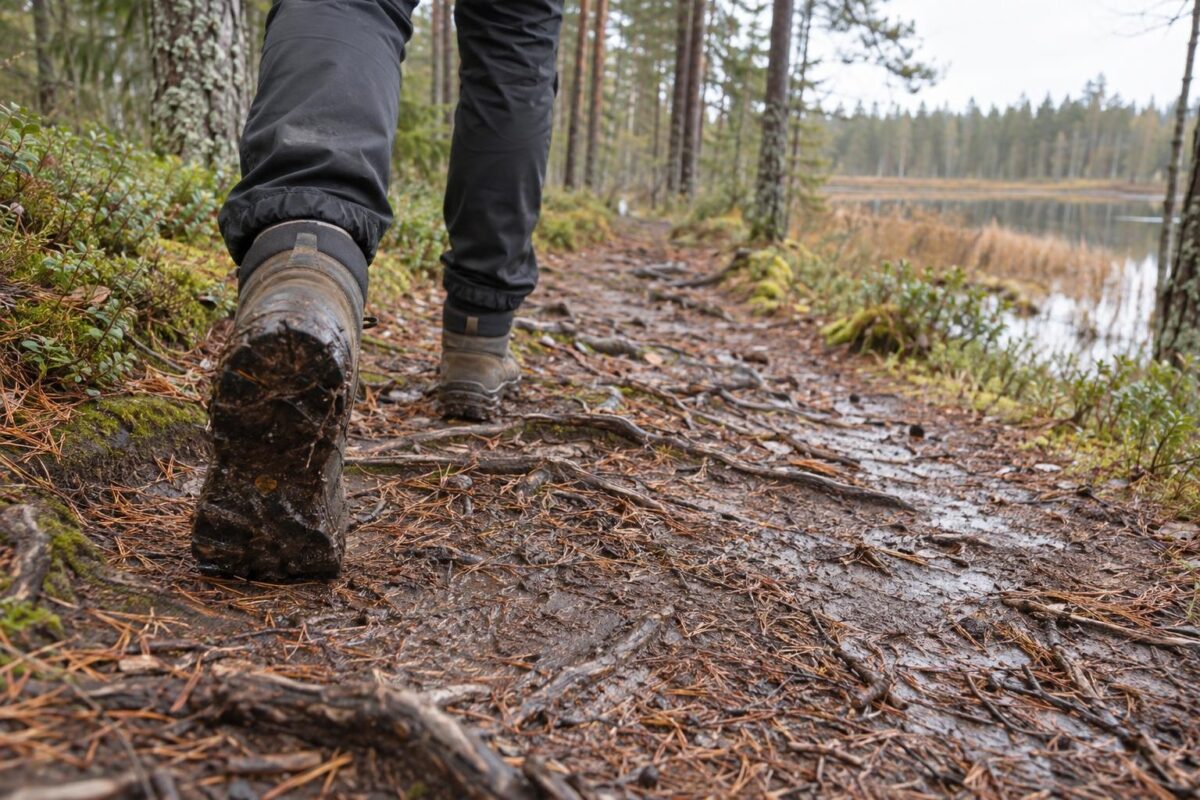
Latvia has no high mountains, so footwear does not have to withstand long, steep, rocky slopes. However, there is a lot of moisture here: spring and autumn mud, wet meadows, bog boardwalks, rooty forest trails, and seaside and dune sand. Footwear therefore needs to grip on wet roots and planks, and should either keep the foot dry for a long time or dry quickly.
Types of footwear
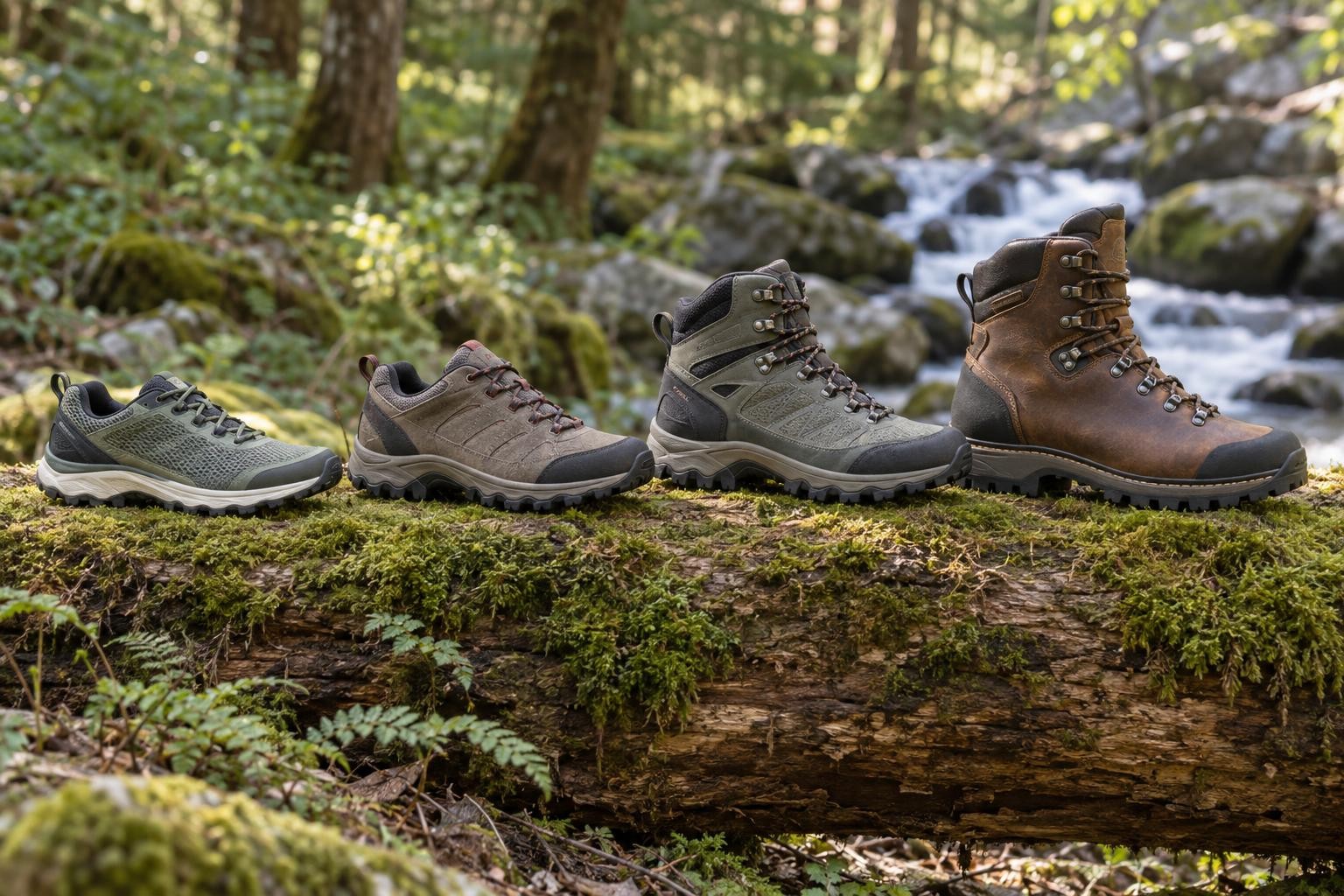
| Type | Suitable for | Advantages | Disadvantages |
|---|---|---|---|
| Trail running shoes and light hiking footwear | Dry and flat trails, summer, light rucksack | Light, flexible, dry quickly | Little ankle support and little protection from stones and roots |
| Low hiking shoes | Most day hikes | Firmer sole, good tread, comfortable straight away | In wet grass and mud, water quickly gets in over the edge |
| Mid-height (mid) | Day and multi-day hikes, wet terrain | Protect the ankle; water and mud get in less easily | Heavier and warmer than low shoes |
| High hiking boots | Heavy rucksack, multi-day hikes, cold season, uneven terrain | Greatest support, firm sole | Heavy, take longer to break in |
| Rubber boots | Very wet meadows, flooded sections, short walks | Waterproof all the way up | Feet sweat, little support, cause blisters on a long walk |

With or without a membrane
A waterproof, breathable membrane is a thin layer in the surface of the footwear that prevents water from getting in, while partly allowing vapour to escape. It is useful in spring, autumn and winter, in dewy meadows and in mud.
A membrane also has drawbacks. In hot weather the foot sweats more in it. If water gets in over the edge of the footwear, for example when crossing a stream or wading through deep grass, the membrane also keeps it inside, and the footwear dries slowly. In summer, and in places where you have to wade, footwear without a membrane and with a mesh surface is often more practical: it gets wet, but also dries quickly.
Sole and tread
On wet roots, stones and boardwalks, the sole material and a deep, widely spaced tread that does not clog with mud are important. A firmer sole lets you feel roots and stones less, but is less flexible. A softer sole is more comfortable on a flat trail. On a long hike with a heavy bag, a firmer sole is useful.
How to try on
-
Choose the time
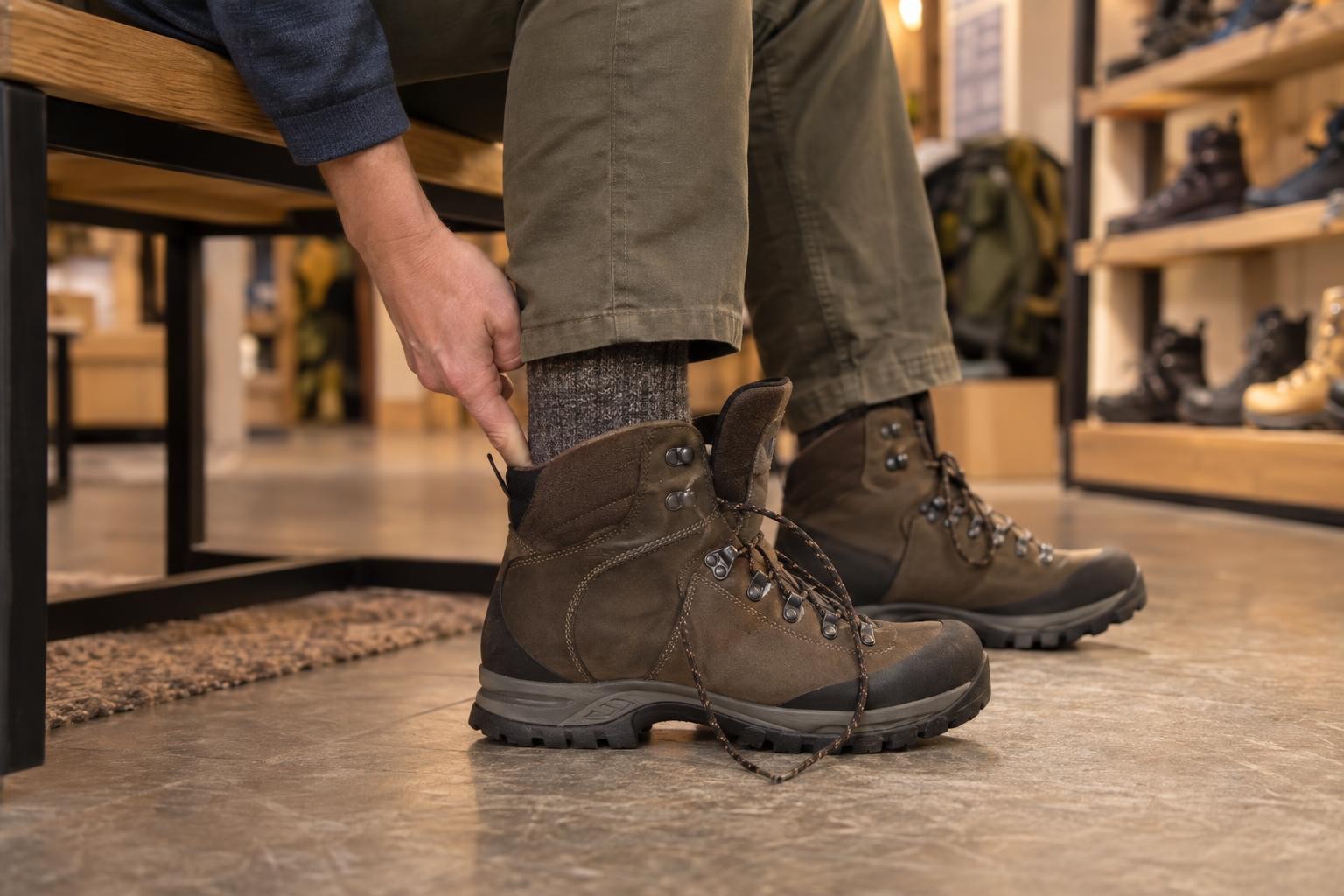
Try on footwear in the second half of the day, when the feet are slightly swollen after walking, just as they will be on a hike.
-
Bring your own socks
Try on with the socks you will wear. A difference in thickness can change the whole feel. If you use orthopaedic insoles, bring them too.
-
Check the length
Before lacing up the footwear, slide the foot forward until the toes touch the toe cap. One finger should fit behind the heel. This is the free length needed in front, so that the toes do not hit when walking downhill.
-
Check the heel
Lace up the footwear and walk around. The heel should stay in place and should not lift with every step.
-
Walk downhill
If the shop has a sloping surface, walk down it. The toes must not press against the toe cap.
-
Check the width
The foot must not be squeezed at the sides. Manufacturers make footwear for feet of different widths, so if your foot is wide, look for a model that has a wide version.

Breaking in
New footwear is first worn on short walks and strolls, gradually increasing the distance. Light footwear is usually comfortable straight away, but stiff leather boots need more time. If the footwear rubs or presses somewhere, first try lacing it differently, and only then look for another solution.
Care
- After a hike, clean off the mud. Dirt damages the surface and impairs breathability.
- Dry at room temperature, removing the insoles. Do not dry by a stove, radiator or campfire: heat can damage the glue, leather and sole.
- From time to time, renew the water-repellent surface treatment with a product suitable for the footwear material.
- If the sole is worn and the tread no longer grips, footwear becomes dangerous on wet roots. Then look for new footwear or replace the sole, if possible.
Before setting out
- The footwear has been broken in, and at least one longer walk has already been done in it
- The socks have been tested together with this footwear (see Hiking socks)
- Spare socks and plasters are packed
- If the route includes a bog or meadows, dry footwear is packed for the return journey
You will find routes in the section Hikes. The length and difficulty of each route are indicated, which helps in choosing footwear.