In brief
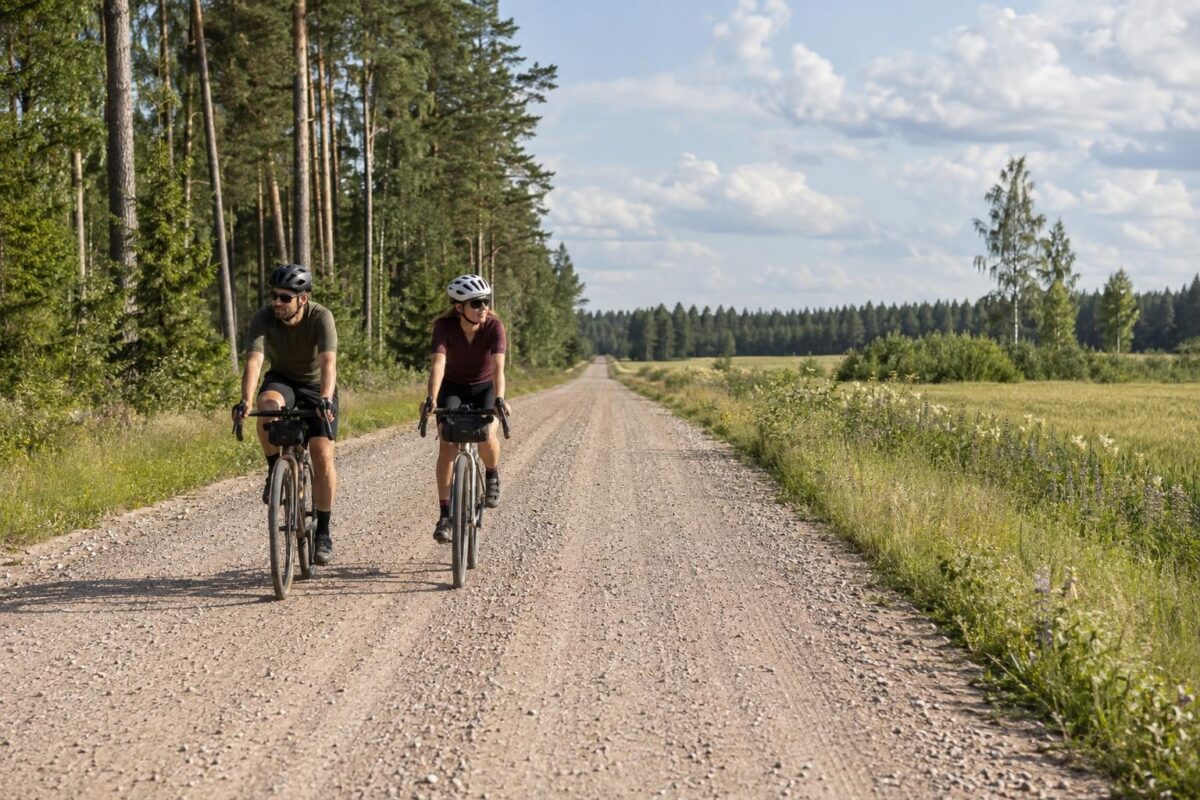
- Choose a bike according to the surface you will ride on most. In Latvia this is often asphalt combined with gravel and forest roads.
- On a long ride, the correct size and properly adjusted contact points (saddle, handlebars and pedals) matter more than the type of bike.
- Wider tyres at lower pressure are more comfortable and safer on gravel than narrow road tyres.
- If you will be carrying luggage, you need low gears and mounting points for a rack or bags.
Start with the surface
On a longer ride that lasts from morning till evening or for several days, a bike’s shortcomings become noticeable. What was acceptable for an hour starts to hurt in the hands, back or seat after six hours. So first consider what surface you will ride on most.
In Latvia, many cycling routes follow minor asphalt roads, gravel roads and forest roads, and sometimes also sandy sections. A bike that performs well on all of these surfaces is usually more comfortable on a long ride than one that is excellent on only one.
Types of bike
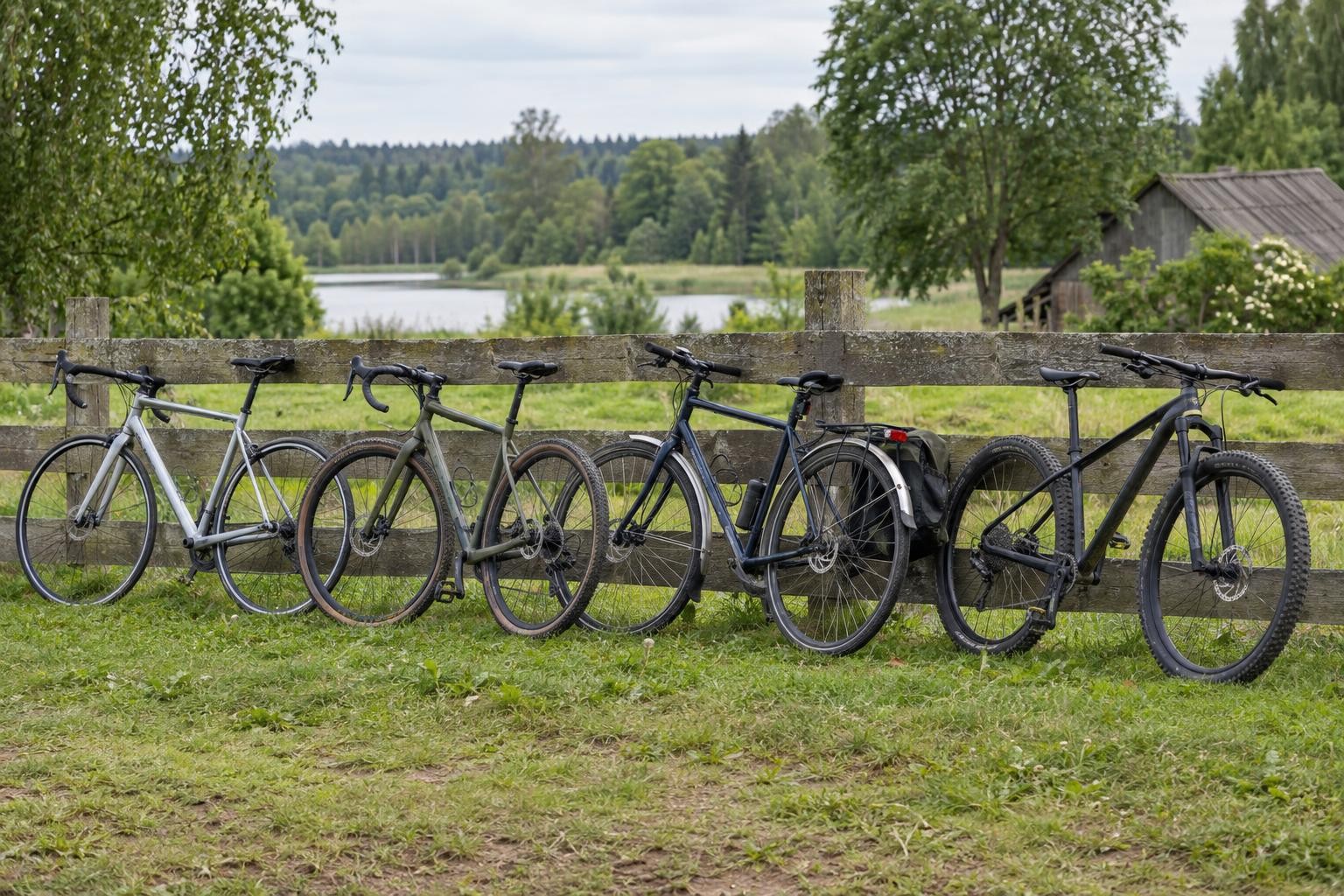
| Type | Tyres (approximate) | Best surface | Strengths | Weaknesses |
|---|---|---|---|---|
| Road | 25–32 mm | Asphalt | Fast, light | Gravel and sand are uncomfortable; often no room for a rack |
| Gravel | 35–50 mm | Asphalt and gravel | Versatile, fast on gravel, usually with mounting points for bags | Less comfortable than a mountain bike on a difficult forest path |
| Touring (trekking) | 35–50 mm | Asphalt and gravel | Stable with luggage, often with a rack, mudguards and lighting | Heavier |
| Hybrid (city and fitness) | 32–45 mm | Asphalt and level gravel | Upright riding position, simple | On a long ride, a flat handlebar allows fewer changes of hand position |
| Mountain (MTB) | About 2.1–2.6 inches (53–66 mm) | Forest paths, sand, roads with tree roots | Grip, control, wide tyres | Slower on asphalt; harder to carry bags with full suspension |
| E-bike | Depending on the type | Depending on the type | Helps on climbs and into a headwind, less tiring | Heavy; battery charging must be planned |
If you need a bike both for day rides and for multi-day trips on mixed surfaces, a gravel or touring bike is usually the best choice. If most of the route follows forest paths and sand, it is better to choose a mountain bike without rear suspension (hardtail), as it is easier to attach bags to.

What matters more than the type
Size
The frame size is determined by height and leg length, but each manufacturer has its own size chart. If you can, try the bike for at least half an hour before buying, not just a lap around the car park.
Tyres
A wider tyre at lower pressure absorbs gravel road vibration better and sinks less in sand. The maximum tyre width depends on the frame and fork, so find out how wide the tyres they can accommodate are. Look for the correct pressure within the limits stated on the sidewall of the tyre. With luggage, slightly higher pressure is needed.
Gears
With luggage and tired legs, a low, easy gear matters more than a high one. If you have to push hard on the pedals on a climb even in the lowest gear, the bike is geared too high for carrying luggage.
Mounting points
Threaded mounting points for a rack, mudguards and bottle cages make a multi-day trip much easier. For how to arrange luggage, read the article Carrying Belongings and Bags by Bike.
Adjust the contact points
-
Saddle height
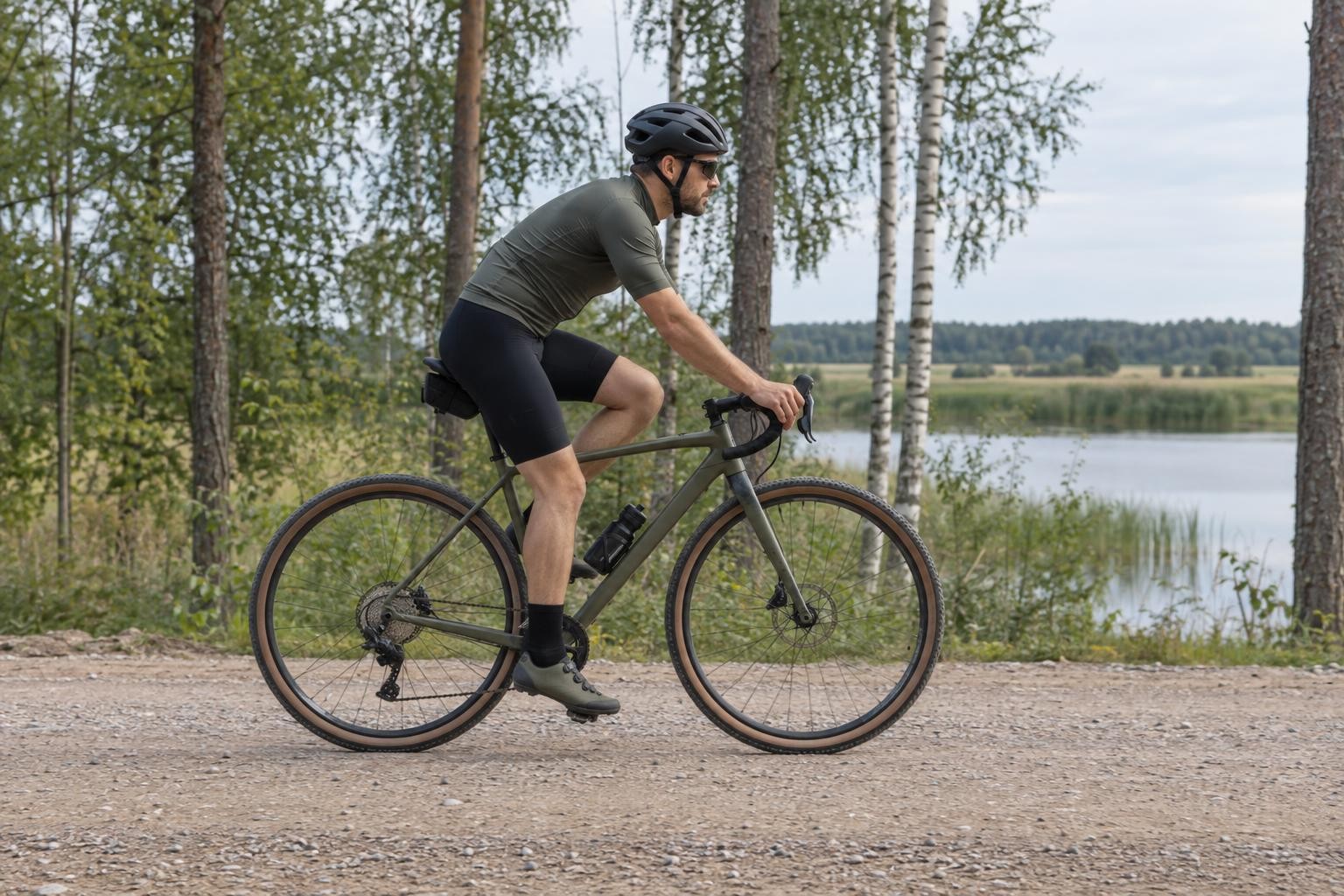
When the pedal is at its lowest point with the ball of the foot on it, the knee should be slightly bent, not fully straight. If your hips rock from side to side while riding, the saddle is too high.
-
Saddle angle
The saddle should be level or almost level. If it tilts forwards, your body weight slides onto your hands.
-
Handlebar reach and height
Your arms should be slightly bent at the elbows while riding, and your shoulders relaxed. If your neck or wrists start to hurt after an hour, the handlebars are too far away or too low.
-
Grips and saddle
The saddle is a very individual matter: the widest and softest is not always the most comfortable. On a long ride, padded cycling shorts and the ability to change your hand position on the handlebars are also useful.

Before setting off
- The brakes work and the brake pads are not worn
- The chain is clean and oiled, and the gears shift without jumping
- The tyres are at the correct pressure and have no cracks or embedded sharp objects
- The bolts of the handlebars, saddle and rack are tightened
- The lights are charged and the reflectors are in place
- For an e-bike, the battery is charged, and you have the charger with you if you plan to stay overnight
- Repair kit, water and food
Requirements under the Road Traffic Regulations
In the dark and in conditions of insufficient visibility, a bicycle must have a white light at the front and a red light at the rear switched on. A bicycle must also be equipped with reflectors: yellow at the sides, white at the front and red at the rear. Cyclists up to the age of 17 must wear a fastened helmet. For adults a helmet is not mandatory, but on a long ride it is a sensible choice.
You will find routes for longer rides in the section Cycling routes. The length is given for each route, and the routes can be downloaded in GPX format.